
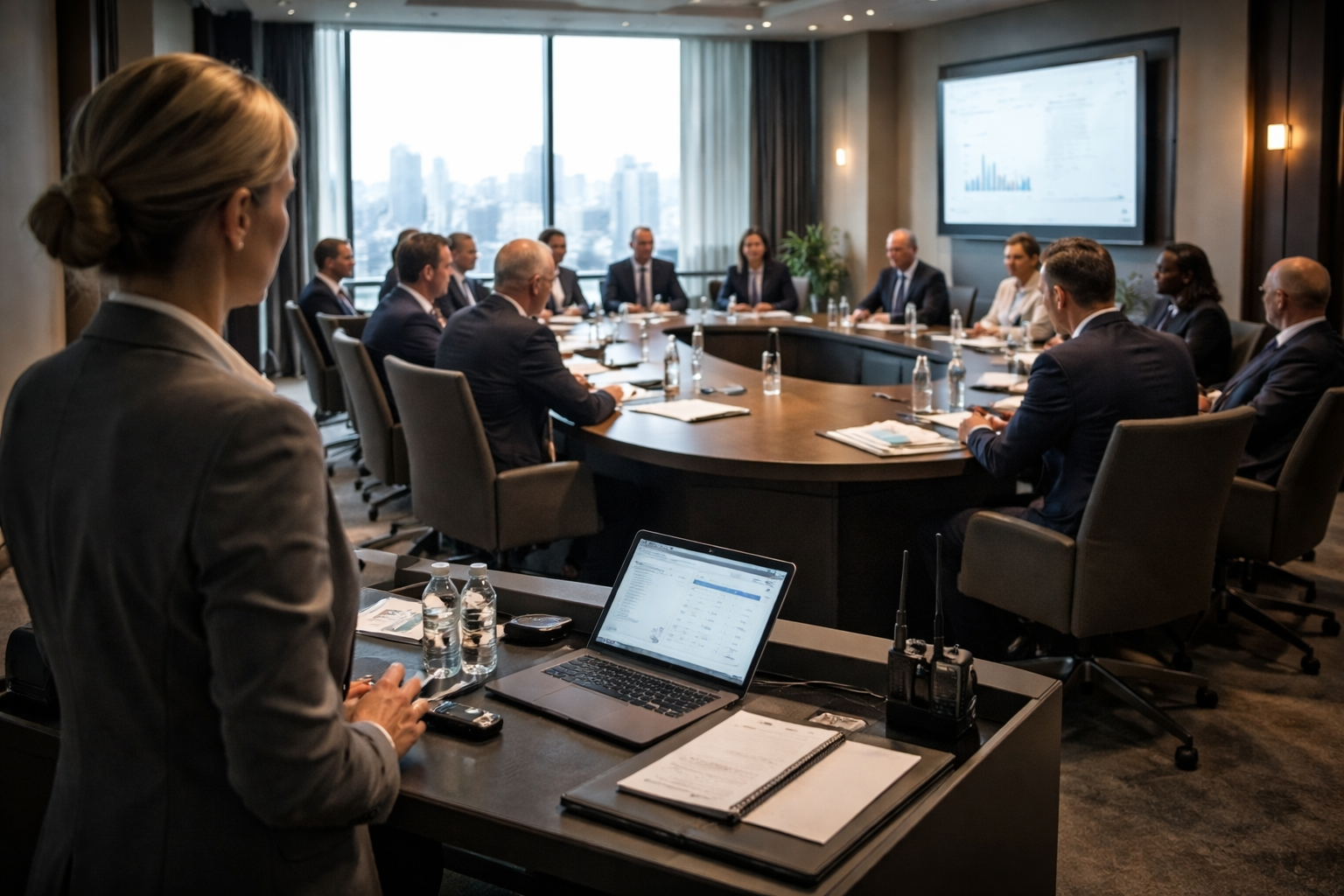
Some of the most demanding events are not the biggest ones. They are the moments where leadership teams pause to align strategy, where boards meet to make decisions that shape the future of an organisation, where stakeholders gather to exchange trust rather than information, and where outcomes matter more than visibility. These events may involve twenty people instead of five hundred, but the expectations placed on them are significantly higher.
In such settings, there is little room for improvisation. Time is limited. Attention is precious. The participants are often senior, experienced, and intolerant of inefficiency. When something goes wrong, it is not merely inconvenient; it is disruptive to focus, credibility, and decision-making. This is where professional event management becomes a stabilising force rather than a logistical convenience.
The role of a Professional Conference Organiser is often misunderstood because much of the work happens before anyone enters the room. It begins with understanding why an event is taking place at all. What needs to happen during those hours? What kind of interaction is required? What should participants leave with? These questions shape everything that follows. Structure is not imposed for its own sake; it is designed to serve intention.
Professional event management is, in many ways, an exercise in anticipation. Anticipating how people move through a space, how energy rises and drops during the day, where friction might appear, and which details—if left unattended—could distract participants from the purpose of the gathering. This is as true for a half-day executive workshop as it is for a multi-day conference. The difference lies only in scale, never in discipline.
What distinguishes professionally managed events is not spectacle, but focus. When events are organised without dedicated support, those responsible for hosting them often find themselves split between leadership and logistics. They answer questions, manage timing, resolve issues, and carry the quiet anxiety of making sure everything holds together. That fragmentation inevitably affects presence. A Professional Conference Organiser absorbs that weight, allowing those who matter most in the room to stay fully engaged with the conversation at hand.
Smaller events, in particular, benefit from this approach. With fewer participants, every interaction is more visible. Every delay is felt. Every lack of clarity echoes more loudly. Professional management ensures that these gatherings feel intentional rather than improvised, calm rather than rushed, and purposeful rather than procedural. Participants may not notice why the event worked so well, but they will feel the difference.
Events also function as mirrors of organisational culture. How time is respected, how communication is handled, how participants are supported, and how smoothly the experience unfolds all send signals about professionalism and leadership maturity. From this perspective, event management is not a background function; it is part of how organisations express who they are and how they operate.
When done well, professional event management is almost invisible. There is no need for constant intervention, no visible scrambling, no sense of things being held together at the last minute. Instead, there is flow. There is space for conversation. There is confidence that the environment has been thought through. This invisibility is not accidental. It is the result of experience, judgement, and a deep respect for the people in the room.
Ultimately, professional event management is not about creating impressive moments. It is about protecting meaningful ones. Whether an event is large or small, public or private, what matters is that it allows people to focus on what truly counts: dialogue, decisions, and progress. And that responsibility does not diminish with size. It often increases.